Dry eye occurs when your eyes don't produce enough tears or the right quality of tears to keep them properly lubricated. This can lead to symptoms like irritation, redness, burning, and a gritty sensation. It may be caused by factors such as aging, screen use, certain medications, or environmental conditions. Left untreated, dry eye can impact your vision and overall eye health. At our clinic, we focus on diagnosing and treating dry eye to help restore comfort and protect your eyes.
What is Dry Eye?
Symptoms you may experience:
Dry eye can cause a range of uncomfortable symptoms that affect daily life. Common signs include persistent dryness, a stinging or burning sensation, and a feeling of grit or sand in the eyes. Many people experience redness, blurred vision, or sensitivity to light. Interestingly, dry eye can also trigger excessive tearing, as the eyes attempt to compensate for the lack of proper lubrication. Other symptoms may include difficulty wearing contact lenses, eye fatigue, or discomfort after reading or using screens for extended periods. If left untreated, these symptoms can worsen, leading to increased discomfort and potential long-term damage to the eye surface.
The tear film is a thin, protective layer that covers the surface of your eyes, keeping them moist, comfortable, and healthy. It’s made up of three key layers that work together:
The Oil (Lipid) Layer: This outermost layer helps prevent the tears from evaporating too quickly. It’s produced by tiny glands in your eyelids and acts like a seal to keep moisture in.
The Water (Aqueous) Layer: The middle layer is mostly water and is the thickest part of the tear film. It hydrates the eye, washes away debris, and keeps the surface of your eye smooth and clear.
The Mucous (Mucin) Layer: The innermost layer helps spread the water layer evenly over the eye’s surface. It also ensures the tears stick to the eye, preventing dry spots.
When all three layers work in harmony, your eyes stay properly lubricated and protected. If any of these layers aren’t functioning well, it can lead to dry eye, causing discomfort and vision issues. At our clinics, we focus on diagnosing and treating the root cause of dry eye to restore balance to your tear film.
Let’s talk Anatomy:
What happens when it all goes wrong?
The majority of dry eye (86%) is due to a poor or insufficient oil layer. This may be because the glands in the lids (Above) are blocked or there may be significant inflammation causing them to function poorly.
1. Blepharitis – Blepharitis is an inflammation of the eyelids that causes redness, swelling, and irritation. It occurs when the tiny oil glands near the base of the eyelashes become clogged or infected. This can lead to symptoms like itchy, crusty eyelids, burning eyes, and a gritty feeling. Blepharitis is a common condition that can contribute to dry eye and requires proper care to manage symptoms and keep the eyes healthy.
2. Meibomian gland dysfunction – Meibomian gland dysfunction (MGD) happens when the oil-producing glands in your eyelids, called meibomian glands, don’t work properly. These glands produce the oil layer of your tears, which helps prevent the tears from evaporating too quickly. When the glands are blocked or produce poor-quality oil, it can lead to dry eye, irritation, and inflammation. MGD is a common cause of dry eye and often requires treatment to restore proper tear balance and eye comfort.
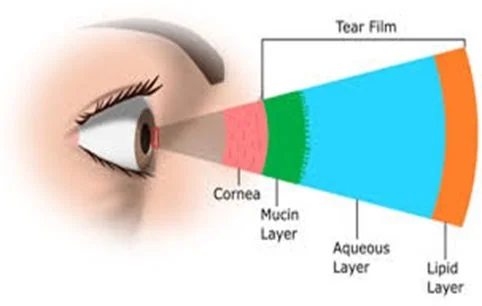
Layers of the tear film.